
Home » Uncategorized (Page 3)
Category Archives: Uncategorized
Britain’s real-life Game of Thrones
So Game of Thrones Season 5 is here at last! HBO’s colossally successful show is set to hurl us through more scenes of plotting and intrigue, bloody battles and epic twists as the fight to rule the Seven Kingdoms and secure the Iron Throne rages on.
Real-life British history
With British accents dominating the cast, it’s genuine British history that inspired the epic and often gory spectacles on the screen, confirmed by George RR Martin, the author of the books.
Britain’s history is very vivid and very visible. You can step inside castles and courtyards and wander the corridors of power in the footsteps of kings and queens or stand in the middle of ancient battlefields that saw thousands of sword- and shield-wielding warriors changing the course of history.
The warring houses of Stark and Lannister in the series are compared to the real-life 15th-century battles between the houses of York and Lancaster in the War of the Roses; a bloody civil war which thundered on for decades.
So where to see it for real

Bosworth Field Visitor Centre brings the site of one of the war’s most decisive battles to life with fascinating displays.

To the north, Dunstanburgh Castle was taken twice by the Yorkists and now remains as dramatic looking ruins perched along the Northumbrian coastline – a pristine location dotted with castles.

Head further north still and you’ll come to Hadrian’s Wall, an incredible UNESCO World Heritage Site stretching right across northern England and southern Scotland. Building began back in AD 122 under the orders of Roman Emperor Hadrian to separate the Romans from the Picts who were seen as “wild” and “barbarian”. Giant wall? “wildings”? Sound familiar?

And of course Game of Thrones has Daenerys Targaryen – Mother of Dragons – exiled and then building an army across the ‘Narrow Sea’. Compare to Henry Tudor who, during the War of the Roses, was over another narrow sea – the English Channel, building an army of his own.
He’d later return with his troops to Wales, the land of his birth, gathering more support before tearing into the action and claiming the throne.
Wales, a country with more castles than anywhere in Europe, has a rather iconic national flag. It’s emblazoned with an enormous snarling red dragon.
In fact, you can pretty much pick any period and place in Britain and you’ll find enough battles, seiges and conspiracies to inspire plenty more fantasy series from a land with an epic past.
View the full story and follow the excellent Visit Britain Travel Blog here
Welcome2Britain
The Small Group Touring Experts
Can you beat this Great British bucket list?
After Barack Obama knocks a visit to Stonehenge off his bucket list, what else is there to do in Britain before you die?

When Barack Obama ordered his helicopter pilot to make an unscheduled stop at Stonehenge on Friday, following the Nato summit in Wales, he explained that the prehistoric landmark in Wiltshire was something he had always wanted to see.
“Knocked it off the bucket list,” he said.
A visit to Stonehenge also features on the “Great British Bucket List”, published in April – 50 feats to complete in Britain, which includes things as mundane as watching a box set of Only Fools and Horses to more active experiences, such as walking the Lake District and sailing around the Isle of Wight.
Top of the list was eating fish and chips on a seaside pier followed by whale watching in Wales.
Having a pint in the Rovers Return, the fictional pub in ITV’s Coronation Street, is one thing Britons apparently must do before they die, as is seeing Morris dancers at a country pub.
Others said people must take a ferry across the Mersey and see the Christmas lights in Oxford Street in London before they die.
The Great British Bucket List was compiled by Ask Jeeves, the search engine, which asked 1,000 people what they would like to do before they die.
The phrase “Bucket List” comes from the idiom “kick the bucket” – meaning to die.
The phrase became increasingly popular after the 2007 film The Bucket List, staring Jack Nicholson and Morgan Freeman as two terminally ill men who escape from a cancer ward to go on a road trip with a wish list of things to do before they die.
Their adventures include skydiving, visiting the Taj Mahal, riding motorcycles on the Great Wall of China and going on a lion safari in Africa.
In contrast, Ask Jeeves found that Britons would be content with having a picnic, seeing inside the Houses of Parliament and going to a test match.
A spokesman for Ask Jeeves said: “It may take some time to do all 50 but at least you will not have to pay thousands to travel the world to do so.
“Most of these bucket lists include the kind of ambitions that look wonderful on paper but are out of reach for millions of us.
“Instead, we thought it would be good to look closer to home to find the kind of experiences Brits think everyone should try at least once.”
The Great British Bucket List in full
1. Eat fish and chips on a seaside pier
2. See whales off Wales
3. Go to a night at the Proms at the Royal Albert Hall
4. Visit Giant’s Causeway
5. Have a picnic at an open air concert
6. Go up in the London Eye
7. Travel Scotland’s West Coast by rail
8. Watch a Shakespeare play in Stratford-upon-Avon
9. Dine in a Gordon Ramsay restaurant
10. Go to a British Grand Prix
11. See inside the Houses of Parliament
12. Get the Ffestiniog railway in Snowdonia
13. Go to Glastonbury festival
14. Hold the FA Cup trophy in your hands
15. Take in the view from the top of the Shard
16. Be at Stonehenge on longest day of the year
17. See the Trooping the Colour
18. Go to a cricket test match
19. Visit ‘The Prisoner’ village in Portmeirion, Wales
20. Have tea at Betty’s tearooms, Harrogate
21. See a traditional Christmas pantomime
22. Watch a British player at Wimbledon
23. Do a ‘Wainwright’ walk in the Lake District
24. Drive round Brands Hatch motor racing circuit in Kent
25. Visit a whisky distillery
26. Go to a Six Nations rugby match
27. Go on a Jack the Ripper guided walk in London’s East End
28. Have a pint in the Rovers Return, the fictional pub in ITV’s Coronation Street
29. See Lake Windermere by boat
30. Go on a historic London pub tour
31. Experience the Notting Hill Carnival
32. Try a deep fried Mars Bar
33. See the fireball ceremony at Stonehaven, Scotland, on New Year’s Eve
34. Sail round the Isle of Wight
35. Attend the Grand National, Guineas and Gold Cup horse races
36. Go to a World Darts Final
37. Take a selfie at both John O’Groats and Land’s End
38. Take a ferry across the Mersey
39. Climb Ben Nevis
40. See Tower Bridge raised
41. Visit Borough food market, London
42. Eat Haggis on Burns Night, in Scotland
43. See Morris dancers at a country pub
44. See the Christmas Lights on Oxford Street
45. Be at a recording of The X Factor or Britain’s Got Talent
46. See Blackpool Illuminations
47. Watch a boxset of Only Fools and Horses
48. Watch the Boat Race
49. Attend first day of Harrods sale
50. Watch the London Marathon live
Welcome2Britain
The Small Group U.K Touring Experts
Top ten UK landmarks to see before you die: Buckingham Palace, Loch Ness, Stonehenge
THE UK has some of the best tourist attractions in the world, from stunning castles, to Europe’s most famous prehistoric monument, to an indoor rainforest
 Take a tour of the Queen’s official London residence [ GETTY]
Holidaying at home? Here’s your chance to start ticking off some of the top 10 must-see attractions, according to a poll organised by Travel site CheapHolidayLand.com Some of the attractions got the same number of votes so, in no particular order…
- Walk up the Mall to see Buckingham Palace – one of the four London attractions to make it into the top 10. Each summer the Palace also opens its doors to public tours until September 28. http://www.royalcollection.org.uk/visit/the-state-rooms-buckingham-palace/plan-your-visit
- See the world’s largest indoor rainforests, created in the giant domes of the Eden Project at St Austell, Cornwall. There special summer dinosaur exhibition runs until September 16. edenproject.com
 Stonehenge – Europe’s most famous prehistoric monument. Historians say it was built around 3100 BC [GETTY]
 Marvel over the Imperial State Crown and other Crown Jewels at the Tower of London [GETTY]
- Ancient Stonehenge is Europe’s best-known prehistoric monument. Don’t miss it! You’ll find it close to Salisbury in Wiltshire and a short drive from Bath. http://www.english-heritage.org.uk/daysout/properties/stonehenge/directions?lang=en
- Gasp at the Crown Jewels on a trip to the Tower of London and see this year’s special ‘poppy’ artwork there to commemorate the 100th anniversary of World War One. hrp.org.uk/TowerOfLondon/
 Hunt for the famous Loch Ness Monster in Scotland, just south of Iverness [GETTY]
- Go monster-hunting on a trip to Scotland’s must-see, Loch Ness. This 37 kilometre-long lake is south of Inverness and best-known for sightings of the mystery ‘Nessie’. visitlochness.com/
- Contemplate thousands of miles of the Atlantic Ocean on a visit to Cornwall’s legendary Land’s End. It’s the most south-westerly part of mainland Britain and stunning scenery have helped make it a top spot. landsend-landmark.co.uk/
 Antony Gormley’s impressive 66ft, Angel of the North Statue, located near Newcastle and Gateshead. [ GETTY]
- See the inspired vision of one of the most recognisable landmarks in Britain, the Angel of the North, created by artist Anthony Gormley and standing watch over the A1 near Gateshead. http://www.angelofthenorth.org.uk
 Head to Westminster, home to the Houses of Parliament and Big Ben for some political sight seeing [ GETTY]
- Hear Big Ben, the world’s most famous clock, striking the hour at the Houses of Parliament, on the banks of the Thames. It’s even possible to arrange a tour of inside through your local MP. parliament.uk/
 Built around 1000 years ago – Benedictine monks first settled at the Abbey [ GETTY]
- Step back in time at London’s Westminster Abbey. A church was first created at this spot over 1,000 years ago. It’s also the site from where the world watched the Duke and Duchess of Cambridge get married in 2011 westminster-abbey.org/home

Built in the Bronze Age around 900 BC, Edinburgh Castle was once home to Mary Queen Scots [ GETTY]
- See stunning Edinburgh Castle, a real highlight of a trip to Scotland’s capital city. Listen out for Edinburgh’s ‘big bang’ every day at 1pm when the traditional canon there is fired. edinburghcastle.gov.uk/
By: Anne Gorringe
Full article: http://www.express.co.uk/travel/shortbreaks/500735/Top-ten-UK-landmarks-to-see-before-you-die-Buckingham-Palace-Loch-Ness-Stonehenge
Welcome2Britain
Sightseeing Tours of England
The Small Group UK Tour Experts
Searching for a Small Group Tour of Northern Ireland and Atlantic Coast
Small group tours men you can get off the beaten track and explore the scenic back roads.
Searching for short Small Group Tours of Western Ireland
Thanks. We are the small group tour experts!
Looking for a small group multi-day tour of England and Wales
Small groups are more fun……………
Downton Abbey finale – what do we want to happen in the last episode of Season Four?
We now have exclusive day tours available throughout 2014…..
Clocks go back today! The origins of British Summer Time (BST)
BRITISH summer time officially ends today as the clocks will went back one hour today at 2 am
But why was this implemented and when did we begin to see a distinction between “summer time” and “winter time”?
Uniform legal time
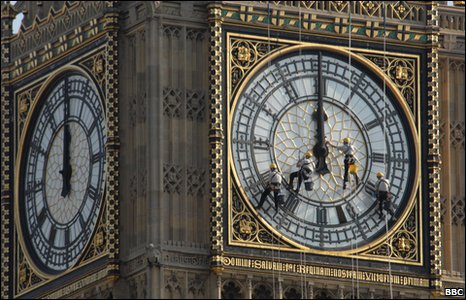
Clocks normally go forward in March and return to GMT in October
The legal time that Britain uses now was implemented relatively recently. Up until the coming of the railways, people kept time by the sun – so Manchester, for instance, would be on a different time to London. This was known as local mean time.
However, once the use of railways became widespread and commonplace the use of local mean time began to cause significant problems.
It meant that the time at one end of a railway line often differed significantly from the other, meaning passengers were often unsure at what time their train was actually departing from their station.
As a result, rail companies began to keep London time from the 1840s and in 1847 a formal recommendation was put forward for all railway companies to adopt Greenwich mean time.
In 1880 an Act of Parliament made Greenwich mean time the standard for the whole of Great Britain. Ireland initially adopted Dublin mean time but this was changed in 1916 to Greenwich mean time
British Summer Time
In 1907 William Willett – a keen horse-rider – put forward a proposal to advance the nation’s clocks by one hour during the summer.
He was incensed by what he saw as the waste of good daylight, as very often during his early-morning summer rides he would notice that, despite the sun having been up for several hours, people were still asleep.
However, he met with much opposition and spent the rest of his life fighting to implement British Summer Time. He failed to convince Government to adopt his plan and died in 1915.
However, a year later Germany adopted the system and Britain soon followed.
By this time, the two countries were at war and it was hoped by the British government that this initiative would save fuel and money. It was rapidly passed through Parliament and the first day of British Summer Time began on 21 May 1916.
Yet this was not a permanent change. During World War II, Britain adopted Double British Summer Time, where clocks remained one hour ahead of GMT in winter and two hours ahead during the summer.
Then, in 1968 a three-year experiment – called British Standard Time – was begun where the country remained one hour ahead of GMT throughout the year.
After the end of the experiment, the Government carried out an analysis – the three-year trial had produced mixed reviews from the public and it was decided to return to the original British Summer Time.
When do clocks change?
The dates that clocks should be changed was laid out by the British Summer Time Act of 1972, which stipulated that GMT would begin on the morning of the last Sunday of October and BST on the morning of the last Sunday in March.
In 2010, the date for the beginning of BST is Sunday 28 March. GMT begins on Sunday 31 October.
To change or not to change?
Nowadays the debate surrounding British Summer Time is as strong as ever and usually grows in intensity around the time of each clock change.
Safety campaigners have recommended that British Summer time be maintained during the winter and a “double summer time” enforced during the summer months.
They point to the fact that, during the experiment of 1968-71, there were fewer recorded casualties during the evenings (although the number of casualties was higher during the darker mornings).
However, others raise concerns that children going to school in such an environment would have to make the journey in the dark at the start of the day, thereby increasing the risk of accidents during that time.
For them, the fact that the number of casualties increased during the mornings between 1968 and 1971 would support their argument that putting the clocks forward in winter is unwise and the system should be left as it currently stands.
Still others have put forward arguments for doing away with British Summer Time entirely and that the country should follow Greenwich Mean Time throughout the year.
They believe that changing the clocks twice a year creates a misconception that, by doing so, people are somehow gaining an extra hour of daylight.
In spite of these arguments, it seems that for the time being British Summer Time will remain and we will continue to change our clocks twice a year.
Link: http://news.bbc.co.uk/weather/hi/weatherwise/newsid_8518000/8518587.stm
Welcome2Britain
The Small Group Tour Experts
What is Great Britain? England, Scotland, Wales, Ireland.
Great Britain is an island lying off the north-western coast of mainland Europe and to the east of Ireland, comprising the main territory of the United Kingdom. Great Britain is also used as a political term describing the combination of England, Scotland, and Wales, which together comprise the entire island and some outlying islands. Great Britain is also widely, though incorrectly, used as a synonym for the sovereign state properly known as the United Kingdom of Great Britain and Northern Ireland. However, it should be noted that in the United Kingdom’s own television coverage of the Olympic Games, the athletes from the United Kingdom team are referred to as the Great British team, in turn under the abbreviation “GB.”
Britain was the name made popular by the Romans when they came to the British islands.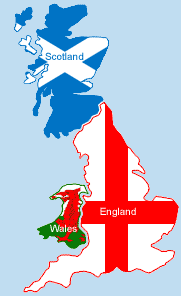
Where is Great Britain? Great Britain is an island lying off the western coast of Europe, comprising the main territory of the United Kingdom.
What is Great Britain? Great Britain is the official name given to the two kingdoms of England and Scotland, and the principality of Wales.
Great Britain is made up of:
•England – The capital is London.
•Scotland – The capital is Edinburgh .
•Wales – The capital is Cardiff.
Is Great Britain the same as the UK? No, Great Britain and the United Kingdom refer to different areas.
Great Britain is very often, but incorrectly, used as a synonym for the sovereign state properly known as the United Kingdom of Great Britain and Northern Ireland or the UK for short.
If you look at the full name of the UK, you will see that the UK includes Great Britain AND Northern Ireland.
England
England used to be known as Engla land, meaning the land of the Angles, people from continental Germany, who began to invade Britain in the late 5th century, along with the Saxons and Jute.
Great Britain
The term Great Britain was first used during the reign of King James I of England (James VI of Scotland) in 1603, to refer to the separate kingdoms of England and Scotland. on the same landmass, that were ruled over by the same monarch. Despite having the same monarch, both kingdoms kept their own parliaments.
United Kingdom (The uniting of kingdoms)
The ‘United Kingdom of Great Britain’ was formed in 1707 by the Act of Union that created a single kingdom with a single Parliament. (Scotland has always retained its own legal system)
A hundred years later the Act of Union of 1801 joined Ireland to ‘Great Britain’ and the name “United Kingdom of Great Britain and Ireland” was first used. (Since 1921 only Northern Ireland has been part of the United Kingdom and so the name changed).
Link: http://resources.woodlands-junior.kent.sch.uk/customs/questions/britain/britain.htm
Link: http://en.wikipedia.org/wiki/Great_Britain
Travel Editor
Welcome2Britain – The Small Group British Tour Experts
Visit Salisbury and Wiltshire
Salisbury: mystical city Ancient landmarks, idyllic vistas and a thriving culture scene give this vibrant city a romantic atmosphere. There are plenty of reasons to visit … (Article extracted from the Guardian: http://www.guardian.co.uk)
Historical high points The only city in Wiltshire has an incredible heritage. In 1069, William the Conqueror built a wooden castle at Salisbury Hill, overlooking a small settlement with a mint and a market. In 1220, building work started on Salisbury Cathedral, a key part of our country’s history too. Its construction was masterminded by William Elias of Dereham, one of the key negotiators of the Magna Carta. You can find one of the finest preserved copies of the 1215 charter inside the gothic cathedral, as well as 332 steps up Britain’s tallest spire. After your tour of the building, take a trip to Salisbury Museum. The atmospheric Grade I-listed, 13th-century building houses a fine collection of prehistoric and medieval artefacts.
 The construction of Salisbury Cathedral was masterminded by William Elias of Dereham, one of the key negotiators of the Magna Carta. Photograph: Greg Funnell for the Guardian
Ancient and mystical monuments Just beyond the compact city lies a magical prehistoric landscape. Explore it with the experts, Spire Travel, who offer luxury one-day tours. You’ll take in the Unesco world heritage site Avebury and Stonehenge, which was completed 3,500 years ago and is thought to have been a temple for worshipping the sun and the moon. The megalithic henge and stone circles, looked after by English Heritage, are considered to be the most important prehistoric earthworks in Europe. For an unforgettable experience, snap up limited camping places for the summer or winter solstice.
Green and pleasant land The ancient sites are surrounded by glorious Wiltshire countryside. Hudson’s Field, situated below the remains of the iron age hillfort Old Sarum, is ideal for walkers and kite-flyers. Further into the city, you can cycle or walk around the water meadows and river banks that captivated English Romantic painter John Constable from his first visit in 1811. There are three main parks to stroll through, as well as several open spaces. Alternatively, go on a romantic adventure through the area by VW campervan: Stonehenge Campervans have three to hire.
Cultural corners There’s a thriving arts scene in Salisbury and a strong theatre tradition that helped to launch the careers of household names such as Prunella Scales and Kenneth Williams. The Salisbury Playhouse is the south-west’s leading producing theatre, while one of this year’s cultural highlights will be the Salisbury international arts festival (24 May to 8 June). One high point is King Lear, which will be performed at 14th-century Old Wardour Castle in Tisbury, a historic village 13 miles from the city and the site of a bronze age settlement. Refresh en route in the local tearooms and bookshop, Beatons; they have 25 varieties of loose tea.
Shop, drink, then drop Thanks to its annual fair, Salisbury has been a shopping destination since 1075. Two current gems are the art and design studios at Fisherton Mill and the Cambridge Wine Merchants. As the city has been awarded a Purple Flag for the quality of its nightlife, head to The Chapel or The Cathedral Hotel for a cocktail before checking into your hotel. Luxury city-centre accommodation includes the Grade II-listed Milford Hall. Or try a more rural experience at Shepherds Hut at Marshwood Farm, Dinton, close to the city (pictured left).
Getting there
Salisbury is well connected to the majority of the UK, by road via the A30 and M3, and by the city’s train station.
From London: 90 minutes by road, and one hour and 20 minutes on the train from Waterloo. Prices from £34.70 From Bristol: one hour and 10 minutes. Prices from £4 From Birmingham: two hours and 50 minutes. Prices from £28.50
We operate daily small group guided tours from London visit Salisbury Cathedral, Stonehenge and Avebury. Please visit our website for full details
Welcome2Britain
The Small Group Tour Experts
 Welcome2Britain