
Bath is the perfect base to explore the West Country.
Travelling to and around Bath
Bath is the perfect base to explore the West Country. Bath is less than a 2 hour train trip direct from London and can save you lots of time and money by joining a tour from Bath rather than London. Located in the South West of England, Bath is easy to get to – only 90 minutes from London Paddington by train and a short drive from the M4/M5 motorways. Bath is 120 miles west of London and just 20 miles from Bristol Airport.
The train station is in the heart of the city centre and there are plenty of car parking spaces available. Bath is a compact city making it easy to walk around during your visit.
Download the Visit Bath Bath Travel Guide to help you plan your travelling to Bath
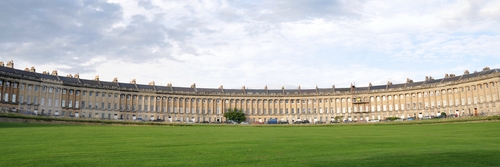
Bath. Royal Crescent.
Travelling by Train
There are regular train services direct from London Paddington and London Waterloo to Bath Spa, with an average journey time of around 90 minutes.
Bristol Temple Meads is just 15 minutes away by train. It is a major hub for travel to all other parts of the country. A number of services to Bath Spa will change at Bristol Temple Meads including services from northern England, Scotland, Devon and Cornwall.
You can get direct trains to Bath Spa from a number of destinations in the UK including Cardiff. Regular train services run from Cardiff Central train station to Bath Spa, with an average journey time of around 65 minutes.
Travel discounts are also available for groups with First Great Western’s GroupSave offer, allowing groups of three or four adults and children to travel off-peak for the price of two adults. Also, if you travel to Bath by train you can take advantage of First Great Western’s 2 for 1 offers at top Bath attractions and restaurants.
If you are staying in Bath for a few days you can easily take a day trip by train to a number of nearby destinations including Bradford on Avon and Bristol
Sightseeing Tours out of Bath
The small group touring experts (Welcome2Britain) offer half and full day tours from Bath include The Cotswold’s, Stonehenge, King Arthur Country, Avebury, Lacock, Castle Combe, Salisburt Cathedral, ancient stone circles / burial mounds and even mysterious crop circles in the summer months. We have a range of tours to the surrounding area, rich in history.
Private Guided Tours from Bath
You can join one of our organised tours or let us help you organise a private guided tour from Bath. A tailor-made tour from Bath is the ideal travel solution for small groups of friends, families, local groups or clubs looking to travel in the West Country. Our dedicated charter team are able to organise every aspect of your private tour, from your hotel accommodation to pre-booking delicious meals in local restaurants, offering local advise and organising entrances to important places of interest. We can tailor the tour to your specific budget
Accommodation in Bath
Bath is host to a whole range of accommodation from your traditional bed and breakfasts where you should be able to find a bed with breakfast included for 60 GBP per person per night, to the luxurious hotels which can charge up to 200 GBP a night. A good option in Bath is one of the smaller, often family run, bed and breakfast or guest house hotels.
Enjoy your stay in Bath and we hope to see you on board one of our award winning tours
Travel Team
www,Wecome2Britain.com
The Small Group Tour Experts
Clocks go back today! The origins of British Summer Time (BST)
BRITISH summer time officially ends today as the clocks will went back one hour today at 2 am
But why was this implemented and when did we begin to see a distinction between “summer time” and “winter time”?
Uniform legal time
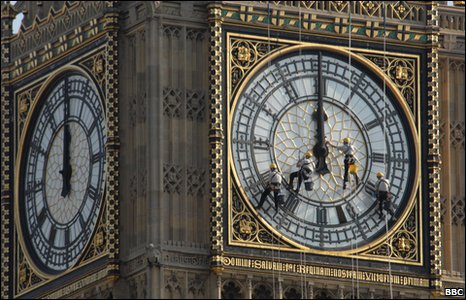
Clocks normally go forward in March and return to GMT in October
The legal time that Britain uses now was implemented relatively recently. Up until the coming of the railways, people kept time by the sun – so Manchester, for instance, would be on a different time to London. This was known as local mean time.
However, once the use of railways became widespread and commonplace the use of local mean time began to cause significant problems.
It meant that the time at one end of a railway line often differed significantly from the other, meaning passengers were often unsure at what time their train was actually departing from their station.
As a result, rail companies began to keep London time from the 1840s and in 1847 a formal recommendation was put forward for all railway companies to adopt Greenwich mean time.
In 1880 an Act of Parliament made Greenwich mean time the standard for the whole of Great Britain. Ireland initially adopted Dublin mean time but this was changed in 1916 to Greenwich mean time
British Summer Time
In 1907 William Willett – a keen horse-rider – put forward a proposal to advance the nation’s clocks by one hour during the summer.
He was incensed by what he saw as the waste of good daylight, as very often during his early-morning summer rides he would notice that, despite the sun having been up for several hours, people were still asleep.
However, he met with much opposition and spent the rest of his life fighting to implement British Summer Time. He failed to convince Government to adopt his plan and died in 1915.
However, a year later Germany adopted the system and Britain soon followed.
By this time, the two countries were at war and it was hoped by the British government that this initiative would save fuel and money. It was rapidly passed through Parliament and the first day of British Summer Time began on 21 May 1916.
Yet this was not a permanent change. During World War II, Britain adopted Double British Summer Time, where clocks remained one hour ahead of GMT in winter and two hours ahead during the summer.
Then, in 1968 a three-year experiment – called British Standard Time – was begun where the country remained one hour ahead of GMT throughout the year.
After the end of the experiment, the Government carried out an analysis – the three-year trial had produced mixed reviews from the public and it was decided to return to the original British Summer Time.
When do clocks change?
The dates that clocks should be changed was laid out by the British Summer Time Act of 1972, which stipulated that GMT would begin on the morning of the last Sunday of October and BST on the morning of the last Sunday in March.
In 2010, the date for the beginning of BST is Sunday 28 March. GMT begins on Sunday 31 October.
To change or not to change?
Nowadays the debate surrounding British Summer Time is as strong as ever and usually grows in intensity around the time of each clock change.
Safety campaigners have recommended that British Summer time be maintained during the winter and a “double summer time” enforced during the summer months.
They point to the fact that, during the experiment of 1968-71, there were fewer recorded casualties during the evenings (although the number of casualties was higher during the darker mornings).
However, others raise concerns that children going to school in such an environment would have to make the journey in the dark at the start of the day, thereby increasing the risk of accidents during that time.
For them, the fact that the number of casualties increased during the mornings between 1968 and 1971 would support their argument that putting the clocks forward in winter is unwise and the system should be left as it currently stands.
Still others have put forward arguments for doing away with British Summer Time entirely and that the country should follow Greenwich Mean Time throughout the year.
They believe that changing the clocks twice a year creates a misconception that, by doing so, people are somehow gaining an extra hour of daylight.
In spite of these arguments, it seems that for the time being British Summer Time will remain and we will continue to change our clocks twice a year.
Link: http://news.bbc.co.uk/weather/hi/weatherwise/newsid_8518000/8518587.stm
Welcome2Britain
The Small Group Tour Experts
 Welcome2Britain